

At a birthday party, they laugh. They talk. They socialize with ease. But later, they step away from the crowd and sit alone, completely content. You pause: are they introverted, extroverted, or something else entirely? You may be noticing signs of an otrovert personality in your child.
If your child connects deeply with individuals yet feels detached from groups, they may not fit traditional labels at all. And it’s high time that you start understanding their personality type.
While most parenting advice focuses on introverts and extroverts, few people talk about this emerging pattern. Understanding what is an otrovert can completely change how you support your child’s emotional world.
Let’s explore the otrovert personality traits and how you can help your child thrive.
What Is an Otrovert? The Personality Type Few People Discuss
Before you come to any conclusion that your child is more of a introvert or extrovert, take a closer look.
The term was introduced by psychiatrist Dr. Rami Kaminski, who described an otrovert as someone who connects deeply with individuals but resists identifying with groups. An “otrovert” is a newly defined personality type, coined in 2023-2025.
Unlike traditional social personality types, this personality doesn’t revolve around energy levels. It revolves around identity. Your child may enjoy conversations, friendships, and leadership, yet still feel separate from the collective.
That distinction defines the otrovert personality type.
Related: Dealing with School Stress In Children: 7 Essential Tips to Help Your Kid
How the Otrovert Personality Differs From Introverts and Extroverts
Half of the time, you’ve probably heard the classic debate of being an introvert vs being an extrovert.
The simple difference between them is that introverts recharge alone and extroverts recharge socially. That everyone knows already.
That independence sets an otrovert apart from other social personality types.
They don’t ask, “Where do I belong?” They ask, “Does this align with who I am?”
7 Overlooked Signs Your Child Has an Otrovert Personality
1. Your Child Prefers Depth Over Popularity
You may notice your child gravitating toward teachers, mentors, or thoughtful adults instead of playground politics.
Otrovert children often seem mature beyond their years. They enjoy meaningful and thoughtful discussions and feel comfortable in adult company.
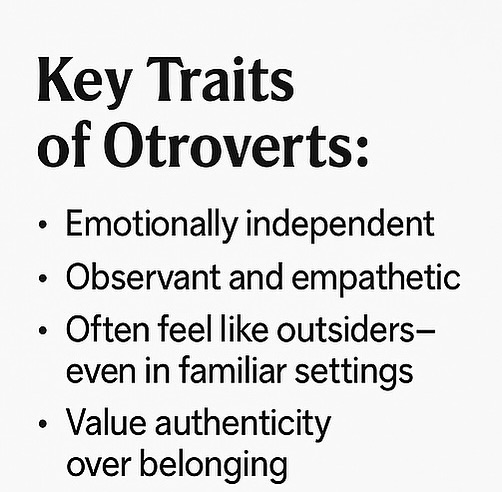
This doesn’t mean they struggle socially. In fact, many otrovert personality traits include emotional intelligence and strong communication skills.
2. Your Child Questions Social Norms Early
Does your child ask things like:
“Why do kids care so much about being popular?” “Why do people follow trends?”
When you hear those questions, you witness independent thinking in action.
Otrovert kids are naturally curious and inventive. They challenge assumptions and think independently. Many otrovert personality traits include curiosity and resistance to blind conformity.
3. Your Child Feels Comfortable — Yet Slightly Separate
Your child may seem well-liked by the people around them, and they may move easily between groups. But internally, they don’t attach themselves to cliques or labels.
Unlike most social personality types, your child doesn’t anchor identity in group membership.
In the traditional introvert vs extrovert person conversation, belonging is often central. For otroverts, belonging simply isn’t a driving need.
4. Solitude Energizes Your Child
Your child reads, builds, creates, or explores independently and feels content. Don’t worry, take it positively, as otroverts genuinely thrive in solitude.
They don’t isolate out of sadness; they recharge by being independent and alone. Understanding what is an otrovert helps you see that this independence reflects strength, not withdrawal.
5. Large Group Events Feel Draining
Birthday parties. School assemblies. Team competitions. Your child attends but rarely thrives in those environments. They don’t fear people. They resist performance.
While many kids crave these environments, otroverts often tolerate them rather than enjoy them. The otrovert personality type often struggles with environments that prioritize group identity over individuality. Your child wants an authentic connection, not crowd approval.
6. Peer Pressure Rarely Works on Your Child
Otrovert children have a very powerful trait in themselves, that is, they don’t fold under pressure easily. Because they don’t depend on group validation, they evaluate choices independently.
Among all social personality types, an otrovert often demonstrates strong internal decision-making. This resistance can protect your child from risky behavior during adolescence.
7. Transitions Disrupt Their Internal Balance
When your family moves, changes schools, or enters new social spaces, your child may struggle more than expected.
They don’t rely on group belonging for stability. They rely on internal routines and personal grounding.
The otrovert personality processes change internally first. Once your child rebuilds personal stability, they adjust socially.
Related: Want Your Kids to Visit You More? Try Saying These 8 Simple Phrases
Parenting An Otrovert: What Actually Helps
If you recognize these signs, take a breath. You don’t need to “fix” anything.
According to Dr. Rami Kaminski, an otrovert remains neurotypical, socially capable, and emotionally aware. Your role involves guidance, not correction.
Here’s what works:
1. Respect Social Autonomy
Don’t force constant group involvement. Observe what genuinely energizes your child. When you honor their social preferences, you strengthen trust.
2. Encourage One-on-One Bonds
Your child thrives in depth, not breadth. Instead of pushing large friend groups, support meaningful individual relationships. These connections align with core otrovert personality traits.
3. Celebrate Individual Identity
American culture often glorifies team spirit, popularity, and influence. But the otrovert personality type reminds us that innovation often comes from independence. When you validate your child’s individuality, you nurture confidence.
4. Create Personal Family Traditions
Instead of centering your calendar around group gatherings, build one-on-one experiences. Road trips. Museum visits. National park hikes. Coffee dates. These moments feel grounding for an otrovert because they prioritize connection without crowd dynamics.
Final Thoughts: Embracing Your Child’s Otrovert Personality
Are you tensed that your child won’t be able to socialize or involve in group activities? Understanding the otrovert personality expands how you view temperament and identity.
Your child may not fit neatly into common social personality types and that’s okay.
If your child seems comfortable standing slightly outside the crowd, confident, curious, and quietly independent, you may be raising a personality type that simply values individuality over group identity. Your child doesn’t need to belong to every group.
They need to belong to themselves. And when you support that independence, you raise a confident, self-aware, deeply thoughtful human being.
Frequently Asked Questions(FAQs)
What is an otrovert personality?
An otrovert personality is described as someone who may function socially but internally feels like an outsider in group settings, even when included. They often prefer selective, one-to-one connections over group interactions and may feel slightly detached in crowds.
Can children be introverts?
Yes, children can absolutely be introverts. Introversion isn’t shyness, it simply means a child recharges by spending time alone or in calm settings rather than large, noisy groups. Introverted children often enjoy deep conversations, independent play, creativity, and meaningful one-on-one connections. It’s a personality trait, not something that needs fixing.
What is the difference between an introvert and an otrovert?
An introvert recharges by spending time alone and often prefers quiet settings and deeper conversations. An otrovert gains energy from being around people individually and not in group activities. It’s simply a difference in how people restore their energy, neither is better than the other.







Leave a Reply